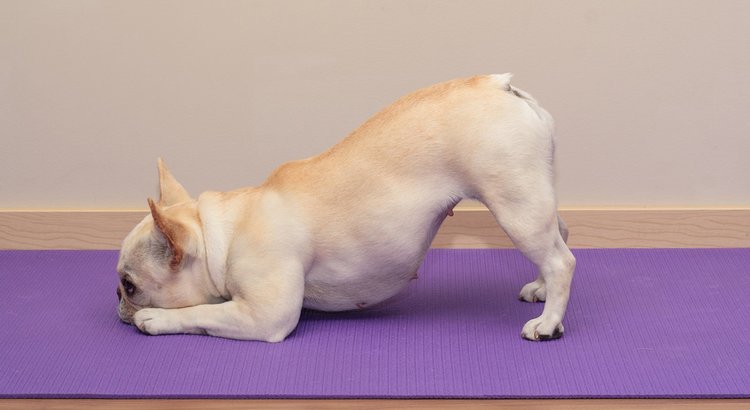
When my Rhodesian Ridgeback greets me, she falls into a downward dog position. Downward dog is when a pup stretches out their front paws with weight bearing on their forearms with their chest off the ground. Their hind end is elevated into the air and often their tail is wagging. I have understood this is a popular yoga pose for humans, providing a full stretch to the spine, hamstrings and calf muscles while strengthening the arms, but what does it mean when a pup attains downward dog?
The Purpose of Downward Dog in Dogs
With knowledge of its purpose with people yoga, what is the purpose of a dog mimicking this position? Pups tend to attain this position when they are happy. Your furry friend may do this when you come back home from being gone, or when you first wake up in the morning. They are excited their human is back in their presence. This is their way of saying “hello, I am so happy you are here.” However, you will not see a dog do this to a stranger as it is a behavior they only share with someone they are comfortable with and truly love. Within their doggy-to-doggy world, this is the universal sign for “Let’s play”. This is true for dogs of all ages, sizes, breeds, and social rankings. Dogs will also tend to grin as a playful expression. If a fellow dog is not familiar with this position, they may receive the gesture as a sign of aggression. If you do become concerned, look for continued “play bows” which means the activity is still enjoyable.
When Downward Dog Indicates a Problem
There are a few circumstances in which the downward dog position can be indicative of something not so fun. If your pup is exhibiting signs of pain with this position it could be that they are suffering from a bout of pancreatitis or back pain. This position may also be caused by something as minor as the presence of gas, or a more serious issue as in a gastrointestinal blockage. Monitor your pet’s mood and behavior while performing downward dog to decide if this is a time to be playful or a time to make a trip to the veterinarian.
Play Bow vs. Prayer Position: Knowing the Difference
Most of the time, the downward dog is a happy play bow, front legs stretched forward, chest low, rear end up, and a loose, wagging tail. Your dog springs right back up, ready to play or just enjoying a good stretch after a nap. It’s completely normal.
The look-alike to watch for is the “prayer position.” It’s the same basic shape, but your dog holds it repeatedly and seems uncomfortable rather than playful. Because the posture temporarily eases pressure in the belly, dogs in abdominal pain often adopt it for relief. Common culprits include pancreatitis, bloat (GDV), and gastrointestinal blockages, some of which are emergencies.
When to Call Your Vet
Contact your veterinarian, or an emergency clinic, right away if the downward dog stretch comes with any of these signs:
- Repeated stretching with no interest in playing
- Vomiting, retching, or diarrhea
- A hard, swollen, or distended belly
- Restlessness, pacing, panting, or whining
- Lethargy or loss of appetite
Bloat and pancreatitis can progress quickly, so it’s always safer to have your pet checked. Emergencies like these can also be costly, a plan like Pin Paws Pet Care can help with eligible vet bills so cost never delays care.
Frequently Asked Questions
Why does my dog do downward dog in front of me? Usually a happy greeting and an invitation to play, dogs typically only do it with people and pets they trust.
Is the downward dog stretch normal for dogs? Yes, a quick stretch after waking or before play is healthy. It only warrants concern if your dog holds it repeatedly and seems uncomfortable.
When should I worry about my dog’s downward dog position? Watch for the warning signs above, especially a tense or swollen abdomen, vomiting, or restlessness. When in doubt, call your vet.